


Why Louisiana Has Parishes, and Who Actually Runs Yours

Every Louisiana kid learns early that the state has parishes where the rest of the country has counties. Fewer people could say why, or who actually decides when their parish road gets patched. The answer runs from Spanish colonial church records to the 1974 state constitution, and it explains why local government looks so different from one parish to the next.
The word comes from the colonial era, when local life in French and Spanish Louisiana was organized around Catholic church parishes. After the Louisiana Purchase, the new territorial government tried the American model first. According to the Police Jury Association of Louisiana, the Legislative Council divided the territory into 12 counties, among them Orleans, German Coast, Acadia, Lafourche, Iberville, Pointe Coupee, Concordia, Atakapas, Opelousas, Rapides, Natchitoches and Ouachita. They proved too large to run well. In 1807 the territory was redivided into 19 parishes, drawn mostly along the lines of the 21 church parishes that existed under Spanish rule in the late 1700s. The old counties lingered on paper for decades, and the Louisiana Constitution of 1845 finally dropped every reference to them.
Those 19 parishes kept splitting as the state filled in. Caddo was carved from Natchitoches in 1838 and Lincoln was created in 1873. Evangeline became the 61st parish in 1910, and the last three, Allen, Beauregard and Jefferson Davis, were cut from Calcasieu Parish soon after, bringing the count to the 64 we have today.
The governing body in most parishes has an unusual name too. In 1807 territorial lawmakers created a 12-member jury to serve alongside each parish judge and justice of the peace, charged with the "execution of whatever concerns the interior and local police and for administration of the parish." An 1811 act made the members elected and officially named the body a police jury. An 1813 law divided parishes into wards, with jurors elected from each ward, serving without pay and subject to a fine if they missed meetings.
That history has a hard chapter that belongs in the telling. As the 64 Parishes encyclopedia of the Louisiana Endowment for the Humanities notes, the 1811 territorial law authorized parish juries to form a gendarmerie to pursue people escaping slavery and to levy a tax on the parish's enslaved people to pay for it. Regulating slavery was one of the bodies' early purposes.
Over the following two centuries, police juries grew into general local governments. The biggest change came with the 1974 constitution, which granted broad home rule authority to parishes and cities and let voters adopt their own charters. Today, according to the Police Jury Association, 38 of the 64 parishes still operate under a police jury, and the other 26 run under a home rule charter. Those charters come in several forms. Most of the charter parishes, among them Jefferson, St. Tammany, Lafourche and Tangipahoa, use the council-president form. Caddo is run by a commission. East Baton Rouge, Lafayette and Terrebonne have consolidated governments that combine parish and city, and Orleans Parish and New Orleans are one and the same.
The police jury remains common in rural Louisiana and in plenty of larger places as well. Ouachita, Rapides, Calcasieu and Bossier parishes all still use it. A police jury can have as few as five members or as many as 15, or the larger number it had before 1974, and a parish of fewer than 10,000 people can have as few as three. Police jurors serve as both the legislative and the executive branch. Where voters have replaced them, the encyclopedia notes, supporters of the change pointed to the efficiency of a separate administrative branch, while police juries have held on in the state's rural regions. The association points out another difference: a home rule charter protects a parish's structure and powers from legislative interference, while a police jury cannot set its own structure and depends on state law.
Whatever the form, the parish government is only part of local government. The sheriff, assessor, clerk of court, coroner and district attorney are elected separately and answer to voters, not to the police jury or council. The parish still has to house those offices and pay a share of several of their costs under state law, while having little say over how they spend it.
For its own part, the parish government handles a long list of duties. The association counts more than 50 functions, including roads and bridges, drainage, sewerage, garbage, fire protection, parks, the parish jail, and in many places water systems and health units. It also maintains the courthouse that holds the other officials' offices. None of the 10 constitutional amendments on the Nov. 3 ballot would change how parishes are governed, though two would let parish governments choose to offer new property tax breaks, one for some homeowners 65 and older (with local voter approval) and one for rehabilitated blighted property, according to the Public Affairs Research Council's guide.
In practice, a pothole on a parish road or a clogged ditch outside city limits goes to your police juror or parish council member, usually elected from a single ward or district. Police jury elections are usually held in odd-numbered years, according to 64 Parishes. The full list of each parish's form of government is on the Police Jury Association's website.
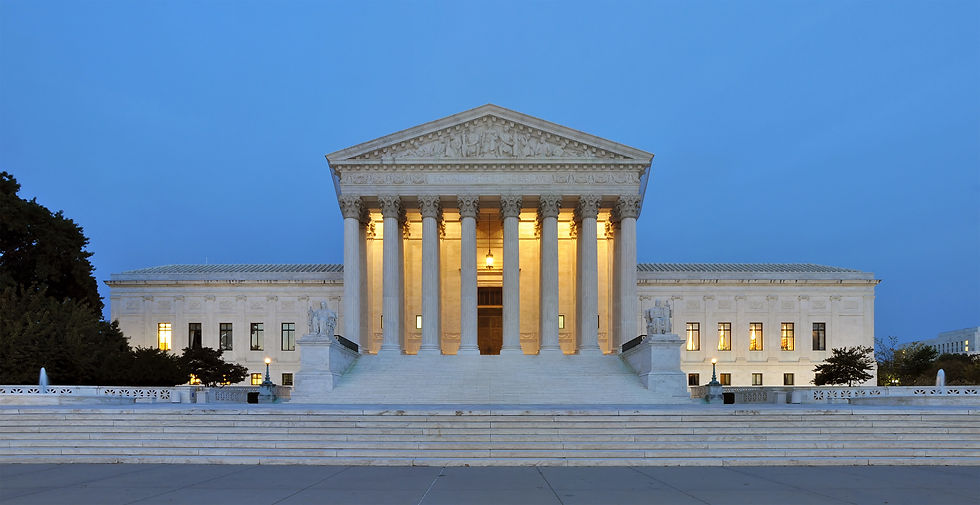
Photo: Z28scrambler / Wikimedia Commons, CC BY-SA 3.0.


Comments